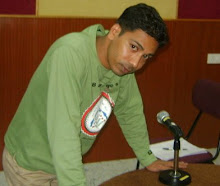
By AKM Moinuddin
Dhaka, Apr 22 (UNB) – Dhaka is eyeing for meaningful settlement of a number of issues with New Delhi including duty-free access of 61 Bangladesh products to the Indian market during the visit of Indian Commerce Minister Anand Sharma.
Indian Commerce Minister Anand Sharma arrives here tomorrow (Saturday) on a two-day visit to strengthen economic ties between the two close neighbors.
During the visit, Sharma is scheduled to have meetings with Prime Minister Sheikh Hasina and Commerce Minister Faruk Khan.
He is also likely to attend a luncheon program to be hosted by Federation of Bangladesh Chambers of Commerce and Industry (FBCCI).
“During the discussion, we’ll give priority to six issues including seeking more duty-free access of Bangladesh products to Indian market,” Commerce Minister Faruk Khan told UNB Staff Correspondent AKM Moinuddin over phone on Friday.
He said the discussion would highlight issues relating to increasing the cotton import quota for ensuring cotton security in Bangladesh, withdrawal of tax imposed on some Bangladeshi jute goods, finalization of opening border `haat’ (market) and implementation of certification of Bangladesh goods by India.
“We’ll discuss and try to finalize the opening date of border `haat’ (market),” Khan said in reply to a question.
The planned border `haat’, common marketplaces for both Bangladeshis and Indians to boost local business and trade, remained unimplemented even after 14 months since the two countries agreed on its introduction.
Several deadlines mentioned by the government have already expired and bureaucratic tangles in both the countries have been blamed for the long delay in opening the border markets.
Dhaka will also discuss removal of non-tariff and para-tariff barriers, often imposed by Indian customs authorities on Bangladesh products.
At present, Bangladesh enjoy duty-free access of only 8.0 million pieces of readymade garment (RMG) products each year under a bilateral trade arrangement between the two countries. For the interim period, the Indian government agreed to allow Bangladesh to duty-free export of 8 million pieces of garment products in 2011.
“We’ll demand increase of the quota until the implementation of more duty-free access of Bangladesh products to Indian market,” Faruk Khan said.
The export will be unlimited once Dhaka’s demand for delisting 61 products from India’s negative list is realized. Dhaka has long been pursuing India to allow 61 Bangladesh items in her market under duty-free facility.
Currently 480 items are on India’s negative list. Last year, Dhaka demanded to remove 61 products, mostly textile items (47), from the negative list.
Bangladesh will also seek increasing the volume of cotton import from India. “We’ll seek an import quota of 20 lakh bales of cotton from India to ensure cotton security in the country,” Khan said.
Bangladesh usually import 55 lakh bales of cotton from international market every year with major import from Uzbekistan 40 lakh bales, 10 lakh bales from India and 5 lakh bales from other countries.
END/UNB/AKM/
Friday, April 22, 2011

Tuesday, March 15, 2011
Parliament gets back liveliness after long break; Speaker pledges adequate time to opposition
By AKM Moinuddin
Sangsad Bhaban, Mar 15 (UNB) – After a long break, parliament got back its liveliness with return of opposition led by Khaleda Zia to the House when it resumed at 5:05pm today.
Before taking up the day’s business sans tabling the question-answer Khaleda stood up and Speaker Abdul Hamid allowed her the floor to make a lengthy statement, touching upon vexing national issues and censuring the government for its ‘failure’ to resolve the problems. She held the floor uninterrupted for nearly an hour.
Earlier, welcoming the opposition the Speaker assured of adequate time to ventilate their views.
Khaleda touched upon various national issues - spiraling price of essentials, oppressive law and order situation, share market scam and sacking of Prof Mohammad Yunus, the Nobel Laureate, from his own brainchild Grameen Bank irking the international community.
She was critical of the government for pursuing a weak foreign policy and questioned the wisdom of borrowing one billion dollars from India for implementing projects of New Delhi’s choice.
She said the whole nation was stunned at the conspicuous silence of the government at the brutal killing of young Felani Khatun who was shot down by Indian BSF on Kurigram border. The horrifying photograph of the body of the poor girl kept hung on the barbed wire fence stirred the conscience of all but the government leadership.
Khaleda was often cheered by the opposition members by thumping the table. The treasury benches unusually exercised utmost patience and listened to her lengthy speech.
Few young, enthusiastic members of the treasury benches, however, disagreeing with Khaleda’s points shouted at her. The chair stopped them and advised to be patient to the views of the leader of the opposition.
The House was virtually packed with almost all members because of return of the opposition after nearly nine months.
Khaleda said they have retuned to stay in the House and requested the Speaker to allow their adjournment motions on vital national issues.
Speaker Abdul Hamid hoped that with presence of the opposition parliament would be more effective and meaningful. He also assured of his neutrality in conducting the House and give time to the opposition members in accordance with the rules of procedure.
END/UNB/AKM
Sangsad Bhaban, Mar 15 (UNB) – After a long break, parliament got back its liveliness with return of opposition led by Khaleda Zia to the House when it resumed at 5:05pm today.
Before taking up the day’s business sans tabling the question-answer Khaleda stood up and Speaker Abdul Hamid allowed her the floor to make a lengthy statement, touching upon vexing national issues and censuring the government for its ‘failure’ to resolve the problems. She held the floor uninterrupted for nearly an hour.
Earlier, welcoming the opposition the Speaker assured of adequate time to ventilate their views.
Khaleda touched upon various national issues - spiraling price of essentials, oppressive law and order situation, share market scam and sacking of Prof Mohammad Yunus, the Nobel Laureate, from his own brainchild Grameen Bank irking the international community.
She was critical of the government for pursuing a weak foreign policy and questioned the wisdom of borrowing one billion dollars from India for implementing projects of New Delhi’s choice.
She said the whole nation was stunned at the conspicuous silence of the government at the brutal killing of young Felani Khatun who was shot down by Indian BSF on Kurigram border. The horrifying photograph of the body of the poor girl kept hung on the barbed wire fence stirred the conscience of all but the government leadership.
Khaleda was often cheered by the opposition members by thumping the table. The treasury benches unusually exercised utmost patience and listened to her lengthy speech.
Few young, enthusiastic members of the treasury benches, however, disagreeing with Khaleda’s points shouted at her. The chair stopped them and advised to be patient to the views of the leader of the opposition.
The House was virtually packed with almost all members because of return of the opposition after nearly nine months.
Khaleda said they have retuned to stay in the House and requested the Speaker to allow their adjournment motions on vital national issues.
Speaker Abdul Hamid hoped that with presence of the opposition parliament would be more effective and meaningful. He also assured of his neutrality in conducting the House and give time to the opposition members in accordance with the rules of procedure.
END/UNB/AKM
Ruling party will welcome any constructive criticism: Matia
By AKM Moinuddin
Sangsad Bhaban, Mar 15 (UNB) – Agricultural Minister Begum Matia Chowdhury in parliament tonight said the government will welcome constructive criticism from the opposition as it is the best way of practicing democracy.
“We’re open to any criticism. We hope you will point out our mistakes and help us correct the mistakes,” Matia told the opposition members.
Describing various development activities of the government including ensuring adequate supply of fertilizers, she said people now do not need to run after fertilizer, rather fertilizer is running after the farmers.
“We’ve reduced the price of fertilizer up to 75 percent. Now we’re providing fertilizers at a nominal price,” she said with a sense of pride.
Requesting the leader of the opposition Khaleda Zia to visit villages and see for herself Matia said farmers now have money from lucrative jute price to buy agricultural inputs.
A gifted fiery orator Begum Matia was sarcastic of the leader of opposition. “They have forgotten everything of their misrule. Probably they eat the rice of forgetful paddy [bhola dhaner bhat]. So, they soon forget everything.”
She said the food production in the last four years of BNP-Jamat tenure maintained minus growth. “None, not even an ant died of food crisis during the present government.”
About law and order situation, Matia admitted a little indiscipline. But she said the government is working hard to maintain discipline.
About the critical views of the opposition on CHT peace accord she posed a question to the opposition leader why they did not cancel the accord when they were in power.
About the Nobel Laureate, Dr Muhammad Yunus, she questioned who threw out his wife and daughter from his house; how he played the role to empower women. “He (Yunus) is a good salesman. He could sale his story very nicely.”
Matia said they knew that their path is not smooth but full of thorns when they assumed the power. “But we will move ahead overcoming all conspiracies.”
She was critical of Khaleda for putting all the blames on Moeen U Ahmed and Dr Fakhruddin Ahmed who took over responsibility of the caretaker government but not Dr Iajuddin Ahmed who was at the helm of the affairs at the crisis period.
END/UNB/AKM/
Sangsad Bhaban, Mar 15 (UNB) – Agricultural Minister Begum Matia Chowdhury in parliament tonight said the government will welcome constructive criticism from the opposition as it is the best way of practicing democracy.
“We’re open to any criticism. We hope you will point out our mistakes and help us correct the mistakes,” Matia told the opposition members.
Describing various development activities of the government including ensuring adequate supply of fertilizers, she said people now do not need to run after fertilizer, rather fertilizer is running after the farmers.
“We’ve reduced the price of fertilizer up to 75 percent. Now we’re providing fertilizers at a nominal price,” she said with a sense of pride.
Requesting the leader of the opposition Khaleda Zia to visit villages and see for herself Matia said farmers now have money from lucrative jute price to buy agricultural inputs.
A gifted fiery orator Begum Matia was sarcastic of the leader of opposition. “They have forgotten everything of their misrule. Probably they eat the rice of forgetful paddy [bhola dhaner bhat]. So, they soon forget everything.”
She said the food production in the last four years of BNP-Jamat tenure maintained minus growth. “None, not even an ant died of food crisis during the present government.”
About law and order situation, Matia admitted a little indiscipline. But she said the government is working hard to maintain discipline.
About the critical views of the opposition on CHT peace accord she posed a question to the opposition leader why they did not cancel the accord when they were in power.
About the Nobel Laureate, Dr Muhammad Yunus, she questioned who threw out his wife and daughter from his house; how he played the role to empower women. “He (Yunus) is a good salesman. He could sale his story very nicely.”
Matia said they knew that their path is not smooth but full of thorns when they assumed the power. “But we will move ahead overcoming all conspiracies.”
She was critical of Khaleda for putting all the blames on Moeen U Ahmed and Dr Fakhruddin Ahmed who took over responsibility of the caretaker government but not Dr Iajuddin Ahmed who was at the helm of the affairs at the crisis period.
END/UNB/AKM/
BNP staged walkout of parliament
By AKM Moinuddin
Sangsad Bhaban, Mar 15 (UNB) – Opposition BNP staged walkout of parliament tonight protesting remarks of Textiles and Jute Minister Abdul Latif Siddiqui.
Referring to the statement of opposition leader Khaleda Zia earlier in the House, Siddiqui observed that by recalling the events of 1972-75 she has virtually reminded the members of the active role of Ziaur Rahman in the killing of Bangabandhu Sheikh Mujibur Rahman.
His observation was strongly protested by the opposition who said it was irrelevant of what Khaleda Zia narrated. They demanded expansion of Latif’s observation from the proceedings. The chair did not pay heed to the demand.
Khaleda was not in the House. The opposition led by Barrister Moudud Ahmed staged the walkout at 8:15pm and did not return till 9pm.
END/UNB/AKM/
Sangsad Bhaban, Mar 15 (UNB) – Opposition BNP staged walkout of parliament tonight protesting remarks of Textiles and Jute Minister Abdul Latif Siddiqui.
Referring to the statement of opposition leader Khaleda Zia earlier in the House, Siddiqui observed that by recalling the events of 1972-75 she has virtually reminded the members of the active role of Ziaur Rahman in the killing of Bangabandhu Sheikh Mujibur Rahman.
His observation was strongly protested by the opposition who said it was irrelevant of what Khaleda Zia narrated. They demanded expansion of Latif’s observation from the proceedings. The chair did not pay heed to the demand.
Khaleda was not in the House. The opposition led by Barrister Moudud Ahmed staged the walkout at 8:15pm and did not return till 9pm.
END/UNB/AKM/
Remittance face serious setback amid uprising in Libya
Dhaka, Mar 3 (UNB) - Country’s remittance earning that witnessed a balanced trend in recent months might face serious setback in the coming months amid recent uprising in Libya, which forced many Bangladeshi workers to return home.
The present crisis is likely to have further adverse impact on Bangladesh’s overseas labour market and balance of payment.
According to the leaders of Bangladesh Association of International Recruiting Agencies (BAIRA)), over 80,000 Bangladeshis used to work in Libya in various types of job.
Bangladesh received remittances totaling Tk 68437.80 million in December 2010 with Bangladeshis in Libya sending Tk 3.5 million. The remittance from Libya was the highest in August, 2010 with Tk 6.9 million, according to Bangladesh Bank’s Monthly Economic Trends, January, 2011.
Wage earners’ remittance inflows increased slightly in January this year to US$ 970.54 million (Tk 68947.20 million) from US$ 969.10 million (Tk 68437.80 million) in December last year, according to Foreign Exchange Policy Department of Bangladesh Bank.
“Definitely, remittance inflow will drop significantly following the Libya crisis. It might impact on the overall economy of Bangladesh,” BAIRA president Abul Bashar told UNB Correspondent AKM Moinuddin over phone.
He said over 80,000 Bangladeshis, mostly technical and skilled, had been working in Libya. The workers from strife-torn Libya have started returning home and if this continues Bangladesh will be
deprived of huge amount of remittance.
Replying to a question, the BAIRA chief said they talked to the officials of some companies in Libya, who assured that they would take back their Bangladeshi workers once normalcy is restored in the
West African country.
Former BAIRA president Ghulam Mustafa said overall remittance inflow to the country would come down drastically if the present crisis in Libya and some other Middle-Eastern continues for long.
He said it will have serious impact on the country’s overall economy, including balance of payment situation and foreign exchange reserve.
He suggested forming a National Committee with representatives of Foreign and Labour ministries as well as other stakeholders to cope with the situation and explore new labour markets.
Replying to a query, Mustafa said the government should take immediate steps to arrange sending the returnee Bangladeshis from Libya to other friendly countries.
He informed that Kuwait has not been recruiting workers from Bangladesh for nearly eleven years while Saudi Arabia did not recruit Bangladeshis in the last seven years.
According to the Center for Policy Dialogue (CPD) analysis, the first half of the current fiscal has posed formidable challenges for the country in terms of the number of workers going abroad and remittance flow. Number of migrant workers has decreased by almost half compared to average figure for comparable periods of fiscals 2006-07 and 2007-08.
It said there has been a significant deceleration in the growth of remittance inflow to Bangladesh during the first five months (July-November) of current fiscal. Total remittance inflow declined
by 1.7 percent during the period compared to the same period of previous fiscal (2009-10).
END/UNB/AKM/
The present crisis is likely to have further adverse impact on Bangladesh’s overseas labour market and balance of payment.
According to the leaders of Bangladesh Association of International Recruiting Agencies (BAIRA)), over 80,000 Bangladeshis used to work in Libya in various types of job.
Bangladesh received remittances totaling Tk 68437.80 million in December 2010 with Bangladeshis in Libya sending Tk 3.5 million. The remittance from Libya was the highest in August, 2010 with Tk 6.9 million, according to Bangladesh Bank’s Monthly Economic Trends, January, 2011.
Wage earners’ remittance inflows increased slightly in January this year to US$ 970.54 million (Tk 68947.20 million) from US$ 969.10 million (Tk 68437.80 million) in December last year, according to Foreign Exchange Policy Department of Bangladesh Bank.
“Definitely, remittance inflow will drop significantly following the Libya crisis. It might impact on the overall economy of Bangladesh,” BAIRA president Abul Bashar told UNB Correspondent AKM Moinuddin over phone.
He said over 80,000 Bangladeshis, mostly technical and skilled, had been working in Libya. The workers from strife-torn Libya have started returning home and if this continues Bangladesh will be
deprived of huge amount of remittance.
Replying to a question, the BAIRA chief said they talked to the officials of some companies in Libya, who assured that they would take back their Bangladeshi workers once normalcy is restored in the
West African country.
Former BAIRA president Ghulam Mustafa said overall remittance inflow to the country would come down drastically if the present crisis in Libya and some other Middle-Eastern continues for long.
He said it will have serious impact on the country’s overall economy, including balance of payment situation and foreign exchange reserve.
He suggested forming a National Committee with representatives of Foreign and Labour ministries as well as other stakeholders to cope with the situation and explore new labour markets.
Replying to a query, Mustafa said the government should take immediate steps to arrange sending the returnee Bangladeshis from Libya to other friendly countries.
He informed that Kuwait has not been recruiting workers from Bangladesh for nearly eleven years while Saudi Arabia did not recruit Bangladeshis in the last seven years.
According to the Center for Policy Dialogue (CPD) analysis, the first half of the current fiscal has posed formidable challenges for the country in terms of the number of workers going abroad and remittance flow. Number of migrant workers has decreased by almost half compared to average figure for comparable periods of fiscals 2006-07 and 2007-08.
It said there has been a significant deceleration in the growth of remittance inflow to Bangladesh during the first five months (July-November) of current fiscal. Total remittance inflow declined
by 1.7 percent during the period compared to the same period of previous fiscal (2009-10).
END/UNB/AKM/
Friday, February 18, 2011
Ship-breaking industry needs strict regulations, proper enforcement of rules to flourish thru protecting environment
By AKM Moinuddin
Dhaka, Feb 18 (UNB) - The ship-breaking sector, formally recognized recently as an industry, needs strict rules and regulations and proper enforcement of the rules for flourishing the sector through protecting environment and offering healthier benefits to the workers.
The parties involved in the sector think that it should be a serious duty of the government agencies and the industry people to ensure that least damage is caused to environment and also better deals offered to the workers engaged in the sector.
If needed, they think, the government should formulate new rules and regulations and ensure their proper enforcement for ensuring environment-friendly growth of the sector which makes a significant contribution to the economy and in employment generation.
On February 13, the government declared the ship-breaking as an industry after a meeting where Prime Minister Sheikh Hasina, a number of ministers, advisers and high officials were present to discuss the sector’s both positive and negative sides.
The government finally placed the ship-breaking industry under the Ministry of Industries after a fruitful meeting.
The ship-breaking industry, located at the seashore in Chittagong, is the main source of bulk of the raw materials used by some 500 private sector re-rolling mills and nearly 50 steel mills for producing mild steel rods, bars and angles at affordable prices.
However, the environmentalists fear that its unregulated and haphazard growth might lead to serious environmental degradation and health hazards.
Talking to UNB Correspondent AKM Moinuddin, Industries Minister Dilip Barua said they would take all the existing problems of the sector into cognizance and would resolve those through discussion with the stakeholders.
“We’ll take a realistic as well as environment and workers friendly policy to ensure the sector’s sustainability which is a must for country’s economic development,” he said.
Replying to a question, Barua said: “We will sit with the stakeholders soon after the gazette notification on the government decision.”
President of Bangladesh Ship Breakers’ Association Hefazatur Rahman said they would sit with Industries Minister Dilip Barua soon to get the government’s view on how they can proceed. “There will be a certain policy.”
Replying to a question, he said: “We don’t think we pollute environment. BELA unnecessarily gave color on the issue.”
Bangladesh Environmental Lawyers’ Association (BELA) welcomed the government decision of declaring ship-breaking as an industry.
“We think the decision will make the proper operation of the industry easier and the government will properly look after it so that the ship breakers take proper clearance certificates before breaking ships,” BELA senior lawyer Iqbal Kabir said.
YPSA (Young Power in Social Action), which has been advocating for a public policy to ensure human rights in the ship-breaking industry, also expressed happiness over the government decision.
YPSA senior executive Muhammad Ali Shahin said: “We want a change in the owners’ tendency o overlooking laws. We’re not against ship-breaking as such but what we’re telling is that it should be done within laws.”
He said that other ship-breaking countries are following specific rules and regulations. “We want similar things here. It will have to be specific about what will be the roles of the Industries Ministry.”
Welcoming the government’s declaration, YPSA chief executive M Arifur Rahman said they want proper government initiative to protect environment and ensure rights of the workers engaged in the ship-breaking industry.
Bangladesh Light Engineering Industries Owners Association (BLEIOA) also welcomed the government’s decision and think it would help the country’s light engineering sector to grow further as it largely depends on ship-breaking industry.
They suggested the government to formulate a policy after discussing with the concerned ministries and stakeholders for a sustainable and environment-friendly ship-breaking industry.
The growing demand for steel products in the country has encouraged a good number of private sector people to be engaged in the industry that proved to be very rewarding, in terms of profit and employment generation.
However, there are allegations in plenty that the ship-breakers often violate the environment by dumping hazardous chemicals and other materials on the sea-beach, rather callously.
Meanwhile, the owners of ship-breaking yards have allegedly been paying low wages to their workers who are exposed to very tough and hazardous conditions. In case of fatal accidents, the workers concerned are not adequately compensated. The government has already prepared a draft rule titled ‘Ship-breaking and Hazardous Waste Management Rules, 2010’ that has been posted on the official website of the Ministry of Environment and Forests seeking public opinion on it.
On February 24 last year, Bangladesh Environment Lawyers Association (BELA) urged the Prime Minister to take necessary measures to enact laws to monitor the ship-breaking industries and import of hazardous ships in the country.
Earlier, on March 19 in 2009, the Supreme Court directed the government to ensure that no ship would enter Bangladesh for breaking without being pre-cleaned outside the territory of Bangladesh.
According to the Import Policy Rule 2009-2012, the Ministry of Commerce has imposed a condition on the ship breakers to obtain pre-clean certificates before importing the ships from outside, which the owners of the ship breaking yards are unwilling to abide by.
END/UNB/AKM/
Dhaka, Feb 18 (UNB) - The ship-breaking sector, formally recognized recently as an industry, needs strict rules and regulations and proper enforcement of the rules for flourishing the sector through protecting environment and offering healthier benefits to the workers.
The parties involved in the sector think that it should be a serious duty of the government agencies and the industry people to ensure that least damage is caused to environment and also better deals offered to the workers engaged in the sector.
If needed, they think, the government should formulate new rules and regulations and ensure their proper enforcement for ensuring environment-friendly growth of the sector which makes a significant contribution to the economy and in employment generation.
On February 13, the government declared the ship-breaking as an industry after a meeting where Prime Minister Sheikh Hasina, a number of ministers, advisers and high officials were present to discuss the sector’s both positive and negative sides.
The government finally placed the ship-breaking industry under the Ministry of Industries after a fruitful meeting.
The ship-breaking industry, located at the seashore in Chittagong, is the main source of bulk of the raw materials used by some 500 private sector re-rolling mills and nearly 50 steel mills for producing mild steel rods, bars and angles at affordable prices.
However, the environmentalists fear that its unregulated and haphazard growth might lead to serious environmental degradation and health hazards.
Talking to UNB Correspondent AKM Moinuddin, Industries Minister Dilip Barua said they would take all the existing problems of the sector into cognizance and would resolve those through discussion with the stakeholders.
“We’ll take a realistic as well as environment and workers friendly policy to ensure the sector’s sustainability which is a must for country’s economic development,” he said.
Replying to a question, Barua said: “We will sit with the stakeholders soon after the gazette notification on the government decision.”
President of Bangladesh Ship Breakers’ Association Hefazatur Rahman said they would sit with Industries Minister Dilip Barua soon to get the government’s view on how they can proceed. “There will be a certain policy.”
Replying to a question, he said: “We don’t think we pollute environment. BELA unnecessarily gave color on the issue.”
Bangladesh Environmental Lawyers’ Association (BELA) welcomed the government decision of declaring ship-breaking as an industry.
“We think the decision will make the proper operation of the industry easier and the government will properly look after it so that the ship breakers take proper clearance certificates before breaking ships,” BELA senior lawyer Iqbal Kabir said.
YPSA (Young Power in Social Action), which has been advocating for a public policy to ensure human rights in the ship-breaking industry, also expressed happiness over the government decision.
YPSA senior executive Muhammad Ali Shahin said: “We want a change in the owners’ tendency o overlooking laws. We’re not against ship-breaking as such but what we’re telling is that it should be done within laws.”
He said that other ship-breaking countries are following specific rules and regulations. “We want similar things here. It will have to be specific about what will be the roles of the Industries Ministry.”
Welcoming the government’s declaration, YPSA chief executive M Arifur Rahman said they want proper government initiative to protect environment and ensure rights of the workers engaged in the ship-breaking industry.
Bangladesh Light Engineering Industries Owners Association (BLEIOA) also welcomed the government’s decision and think it would help the country’s light engineering sector to grow further as it largely depends on ship-breaking industry.
They suggested the government to formulate a policy after discussing with the concerned ministries and stakeholders for a sustainable and environment-friendly ship-breaking industry.
The growing demand for steel products in the country has encouraged a good number of private sector people to be engaged in the industry that proved to be very rewarding, in terms of profit and employment generation.
However, there are allegations in plenty that the ship-breakers often violate the environment by dumping hazardous chemicals and other materials on the sea-beach, rather callously.
Meanwhile, the owners of ship-breaking yards have allegedly been paying low wages to their workers who are exposed to very tough and hazardous conditions. In case of fatal accidents, the workers concerned are not adequately compensated. The government has already prepared a draft rule titled ‘Ship-breaking and Hazardous Waste Management Rules, 2010’ that has been posted on the official website of the Ministry of Environment and Forests seeking public opinion on it.
On February 24 last year, Bangladesh Environment Lawyers Association (BELA) urged the Prime Minister to take necessary measures to enact laws to monitor the ship-breaking industries and import of hazardous ships in the country.
Earlier, on March 19 in 2009, the Supreme Court directed the government to ensure that no ship would enter Bangladesh for breaking without being pre-cleaned outside the territory of Bangladesh.
According to the Import Policy Rule 2009-2012, the Ministry of Commerce has imposed a condition on the ship breakers to obtain pre-clean certificates before importing the ships from outside, which the owners of the ship breaking yards are unwilling to abide by.
END/UNB/AKM/
Sunday, December 19, 2010
Relatives cry for trapped mariners; PM’s intervention sought
By AKM Moinuddin
Dhaka, Dec 19 (UNB) – Bilkis Rahman, a middle-aged woman, squinted at the newsmen and sobbed quietly. Suddenly, emotion got the better of her and tears flooded her eyes as she focused on a photograph. She wiped the tears with her scarf.
For the forlorn mother, the photograph was a most-prized possession – that of her 21-year-old son Engine Cadet Shahriar Rabbi, the youngest victim of MV Jahan Moni which was hijacked by Somali pirates. Rabbi’s father Ziaur Rahman, a cancer-patient, was also weeping beside her spouse, trying to hide his face in his shirt sleeve.
Bilkis, one among the relatives of the trapped Bangladeshi mariners, who came to Dhaka from Chittagong to meet journalists for conveying their plea to Prime Minister Sheikh Hasina for her personal intervention for the rescue of her son.
The air of the entire hall room on the second floor of National Press Club where over 60 relatives of 25 mariners rushed to attend a press conference became heavy long before the formal briefing began.
Each and every relative of the mariners burst into tears. All of them - mother, father, brother and sister of the victims - were seen holding the photographs of loved ones. They could hardly talk to the newsmen.
The only message they wanted to convey was that they want Prime Minister Sheikh Hasina’s direct intervention for the rescue of their trapped near and dear ones from the hands of pirates.
Mahfuza Khatun, who got married just a year back with M Tariqul Islam, fourth engineer of the pirated ship, was also there. She narrated her last conversation with her hubby over phone.
She said: “It was December 12. I received a call from my husband. It was 12:03 am. The conversation lasted for about 8 minutes. He (Tariqul) spoke of food crisis and the ransom demanded by the pirates for their release.”
She said her husband informed her that the pirates demanded US$ 9 million (approx. Tk 62 crore) as ransom with five-day ultimatum. “He said `forgive me, I may not meet you anymore’.”
Mahfuza also read out a written statement on behalf of the relatives of the Bangladeshi crew of MV Jahan Moni, which was hijacked by Somalian pirates on December 5.
She sought Prime Minister’s direct intervention for the release of all the crew members.
“She (PM) is also a mother. She also lost her near and dear ones. She well knows how the pain of such loss means. Please spare us the agony of uncertainty,” Mahfuza implored the Prime Minister.
She also urged the government to take coordinated action with the International Maritime Organization (IMO), International Labour Organization (ILO) and International Trade Federation (ITF).
In their written statement, the relatives alleged that neither the government nor the owners of the pirated vessel have taken any steps though pirates gave five-day ultimatum on December 12 demanding US$ 9 million as ransom for releasing the vessel and its crew.
Shahin Ara Momtaj, an Assistant Director of Anti-Corruption Commission (ACC), said the pirates talked to the relatives of each of the victims for 2-3 minutes over phone on December 12 and conveyed identical message to everybody.
“My nephew (elder brother’s son) talked to us at about 7 pm on the day. He (Engine Cadet Shahriar Rabbi) even sought forgiveness from all saying ‘I won’t be able to meet you…food supply has already dried out’,” she said bursting into tears.
MV Jahan Moni with 26 Bangladeshis - 25 crew members and the spouse of a mariner on board - was pirated on December 5 from a place in the Arabian Sea 170 nautical miles from Lakkha Island of India and about 300 nautical miles from the Kochin port.
The ship carrying 43,150 tons of nickel ore was scheduled to arrive in Greece from Indonesia through the Suez Canal.
END/UNB/AKM
Dhaka, Dec 19 (UNB) – Bilkis Rahman, a middle-aged woman, squinted at the newsmen and sobbed quietly. Suddenly, emotion got the better of her and tears flooded her eyes as she focused on a photograph. She wiped the tears with her scarf.
For the forlorn mother, the photograph was a most-prized possession – that of her 21-year-old son Engine Cadet Shahriar Rabbi, the youngest victim of MV Jahan Moni which was hijacked by Somali pirates. Rabbi’s father Ziaur Rahman, a cancer-patient, was also weeping beside her spouse, trying to hide his face in his shirt sleeve.
Bilkis, one among the relatives of the trapped Bangladeshi mariners, who came to Dhaka from Chittagong to meet journalists for conveying their plea to Prime Minister Sheikh Hasina for her personal intervention for the rescue of her son.
The air of the entire hall room on the second floor of National Press Club where over 60 relatives of 25 mariners rushed to attend a press conference became heavy long before the formal briefing began.
Each and every relative of the mariners burst into tears. All of them - mother, father, brother and sister of the victims - were seen holding the photographs of loved ones. They could hardly talk to the newsmen.
The only message they wanted to convey was that they want Prime Minister Sheikh Hasina’s direct intervention for the rescue of their trapped near and dear ones from the hands of pirates.
Mahfuza Khatun, who got married just a year back with M Tariqul Islam, fourth engineer of the pirated ship, was also there. She narrated her last conversation with her hubby over phone.
She said: “It was December 12. I received a call from my husband. It was 12:03 am. The conversation lasted for about 8 minutes. He (Tariqul) spoke of food crisis and the ransom demanded by the pirates for their release.”
She said her husband informed her that the pirates demanded US$ 9 million (approx. Tk 62 crore) as ransom with five-day ultimatum. “He said `forgive me, I may not meet you anymore’.”
Mahfuza also read out a written statement on behalf of the relatives of the Bangladeshi crew of MV Jahan Moni, which was hijacked by Somalian pirates on December 5.
She sought Prime Minister’s direct intervention for the release of all the crew members.
“She (PM) is also a mother. She also lost her near and dear ones. She well knows how the pain of such loss means. Please spare us the agony of uncertainty,” Mahfuza implored the Prime Minister.
She also urged the government to take coordinated action with the International Maritime Organization (IMO), International Labour Organization (ILO) and International Trade Federation (ITF).
In their written statement, the relatives alleged that neither the government nor the owners of the pirated vessel have taken any steps though pirates gave five-day ultimatum on December 12 demanding US$ 9 million as ransom for releasing the vessel and its crew.
Shahin Ara Momtaj, an Assistant Director of Anti-Corruption Commission (ACC), said the pirates talked to the relatives of each of the victims for 2-3 minutes over phone on December 12 and conveyed identical message to everybody.
“My nephew (elder brother’s son) talked to us at about 7 pm on the day. He (Engine Cadet Shahriar Rabbi) even sought forgiveness from all saying ‘I won’t be able to meet you…food supply has already dried out’,” she said bursting into tears.
MV Jahan Moni with 26 Bangladeshis - 25 crew members and the spouse of a mariner on board - was pirated on December 5 from a place in the Arabian Sea 170 nautical miles from Lakkha Island of India and about 300 nautical miles from the Kochin port.
The ship carrying 43,150 tons of nickel ore was scheduled to arrive in Greece from Indonesia through the Suez Canal.
END/UNB/AKM
Subscribe to:
Posts (Atom)